
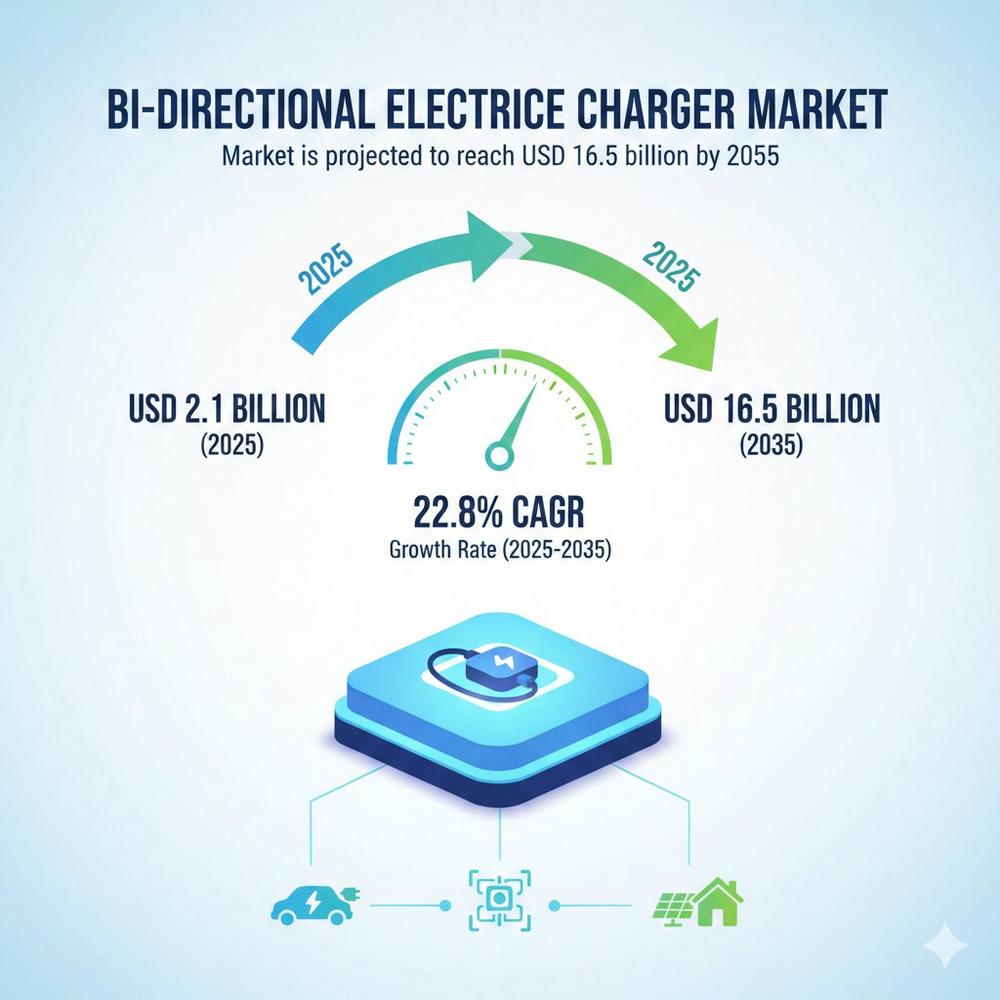
As power grids face increasing pressure from electrification, renewable energy integration, and rising peak demand, bi-directional charging is gaining recognition as a flexible and decentralized energy solution. Electric vehicles equipped with this technology can help stabilize grids, support emergency power supply, and optimize energy consumption across residential and commercial settings.
Key Market Drivers and Structural Connections
The growth of the bi-directional electric vehicle charger market is closely connected to several structural shifts within the energy and transportation sectors. Accelerating electric vehicle adoption is creating a large, distributed network of mobile batteries that can be leveraged beyond driving needs. At the same time, the expansion of renewable energy sources has increased the need for storage and load-balancing solutions, making bi-directional charging particularly relevant.
Utilities and grid operators are exploring this technology as an alternative or complement to stationary battery storage, while policymakers are encouraging smart charging solutions to improve energy efficiency and resilience. These developments have led to stronger collaboration between automakers, charger manufacturers, utilities, and software providers, reinforcing the market’s ecosystem-based nature.
Get access to comprehensive data tables and detailed market insights — request your sample report today!
Technology Evolution and System Integration
Technological progress plays a central role in advancing the bi-directional electric vehicle charger market. Improvements in power electronics have enhanced charging efficiency and safety, while standardized communication protocols are improving interoperability between vehicles, chargers, and energy management systems. Software platforms capable of real-time energy monitoring and automated decision-making are further expanding the functionality of bi-directional chargers.
System integration is becoming a critical focus area, particularly as smart homes, smart buildings, and intelligent grids become more widespread. Bi-directional chargers are increasingly designed to work seamlessly with solar panels, home energy storage systems, and building management software, enabling more holistic energy optimization strategies.
Application Areas and End-User Adoption
Adoption patterns within the bi-directional electric vehicle charger market vary by application. In residential settings, vehicle-to-home solutions are being used to provide backup power during outages and to reduce reliance on grid electricity during peak hours. This use case is particularly attractive in regions with unstable power supply or high electricity costs.
Commercial and industrial users, including fleet operators, are showing strong interest in vehicle-to-grid applications. Fleet vehicles with predictable usage patterns are well suited for managed charging and energy dispatch, allowing organizations to support grid services while optimizing energy expenses. Public infrastructure operators are also evaluating bi-directional chargers as part of broader smart city initiatives.
Perspectives from Industry Stakeholders
Industry participants widely view bi-directional charging as a transformative development. According to a senior executive at an electric vehicle infrastructure company, “Bi-directional charging unlocks an entirely new layer of value for electric vehicles by allowing them to actively participate in energy systems rather than remain passive loads.” Utilities echo this sentiment, emphasizing the technology’s potential to enhance grid resilience and reduce strain during peak demand periods.
Automakers are also playing a key role by designing vehicles that support bi-directional functionality and aligning with charging standards. Their involvement is essential in accelerating market acceptance and ensuring compatibility across different platforms.
Drive Your Business Growth Strategy: Checkout the Report for Key Insights!
Regional Adoption Dynamics
Regional adoption of bi-directional electric vehicle chargers depends largely on regulatory readiness, grid infrastructure maturity, and consumer awareness. Regions with advanced electric vehicle ecosystems and supportive energy policies are leading early deployments through pilot programs and utility partnerships. In contrast, developing markets are approaching adoption more gradually, often integrating bi-directional capabilities alongside broader investments in charging infrastructure and grid modernization.
Despite these differences, interest in bi-directional charging is spreading globally as energy security and sustainability become shared priorities.
Strategic Outlook
The bi-directional electric vehicle charger market is positioned to play a strategic role in the future of both transportation and energy. As technology matures and collaboration across the value chain deepens, bi-directional charging is expected to transition from niche applications to a more standardized component of charging infrastructure. Its ability to support grid stability, enhance energy efficiency, and expand the functional value of electric vehicles underscores its growing importance in the evolving energy landscape.
Future Market Insights, Inc
Christiana Corporate, 200 Continental Drive, Suite 401,
USADelaware Newark,
Telefon: +1-347-918-3531
Telefax: +1 845 5795705
http://www.futuremarketinsights.com
Marketing
Telefon: +13479183531
E-Mail: Rahul.Singh@futuremarketinsights.com
