
Hot, Cold, Dry: Climate Change Shaped Mammal Diversity 66 to 23 Million Years Ago

A research team from the Senckenberg Biodiversity and Climate Research Center in Frankfurt, the German Center for Integrative Biodiversity Research (iDiv) Halle-Jena-Leipzig and Friedrich Schiller University Jena has investigated the impact of climate change on mammalian diversity in Central Asia Mehr
Barbary Macaques in Northern Germany: Researchers Discover a More Than 300,000-Year-Old Tooth

A research team from the Senckenberg Centre for Human Evolution and Palaeoenvironment at the University of Tübingen and Leiden University in the Netherlands has examined a tooth from the Schöningen archaeological site in Lower Saxony. In their study, now published Mehr

Lebanon: 400,000 Years of Climate and Landscape History Rediscovered

Archaeological legacy collections housed at the Museum of Lebanese Prehistory at Saint Joseph University in Beirut reveal the wide diversity of environmental conditions in the eastern Mediterranean region during the Pleistocene. An international research team led by Dr. Gabriele Russo Mehr

The Roof of the World: A Biodiversity Hotspot for 39 Million Years

A Chinese-German research team, including Senckenberg researcher Prof. Dr. Andreas Mulch, has investigated when and under what conditions the extraordinary biodiversity in eastern Tibet developed. The study, published in the journal “Nature Communications Earth & Environment,” shows that as early Mehr

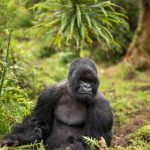
IUCN Green Status Assessment reveals uneven recovery for Eastern Gorillas

A landmark assessment of recovery The International Union for Conservation of Nature (IUCN) has released the first Green Status Assessment for the eastern gorilla (Gorilla beringei), offering the most comprehensive evaluation to date of the species’ recovery, ecological functionality, and Mehr

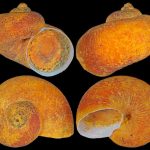
62% of Hydrothermal Vent Molluscs Now Threatened by Deep-Sea Mining

As delegates from around the world gather in Kingston, Jamaica, for high-stakes International Seabed Authority (ISA) negotiations to debate the future of deep-sea mining, a stark scientific warning has emerged from the ocean’s depths. An update of The IUCN Red Mehr

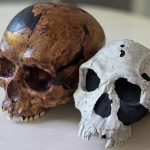
Larger Brain, Smaller Face: Human Evolution Took a Different Course Than Previously Thought

A new study, published today in the journal “Nature Communications,” suggests that two of the best-known trends in human evolution – brain growth and the reduction in the size of the face and jaw – may be far less attributable Mehr

Silent Extinction: Loss of Genetic Diversity

Genetic diversity is crucial for the survival of species. It strengthens the adaptability, resilience, and long-term stability of populations. An international research team led by Senckenberg researcher Prof. Dr. Deborah Leigh and comprising other members of the Conservation Genetics Section Mehr

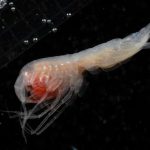
More Life at Sea: Unexpectedly High Biodiversity in the Deep-Sea Marine Protected Area

An international research team has studied the genetic diversity of bottom-dwelling amphipods in the newly established “North Atlantic Current and Evlanov Sea Basin” marine protected area. A single sample collected from a depth of nearly 3,700 meters revealed 47 genetically Mehr

Blue Planet with a White Spot: More Than Half of the World’s Oceans Remain Insufficiently Explored

Large parts of the oceans – particularly the deep sea as well as tropical and polar regions – have only been poorly explored to date. In a study published today in the journal “Nature Communications,” Senckenberg researcher PD Dr Hanieh Mehr