
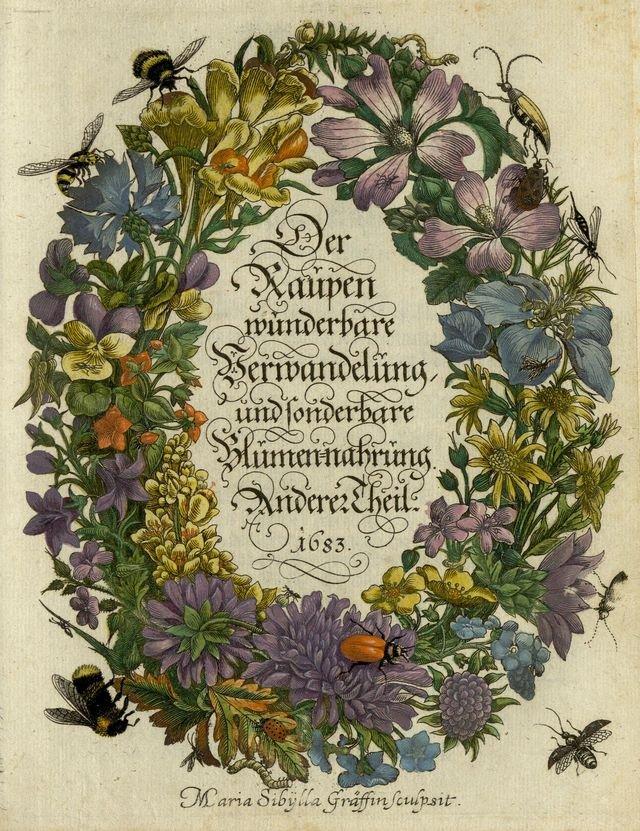
From detailed illustrations of insects to early descriptions of plants, historical literature remains a cornerstone of biodiversity research to this day. Researchers often have to rely on publications from past centuries to correctly classify or describe new species. “By joining the Biodiversity Heritage Library, we are specifically integrating our historical library collections into an international knowledge infrastructure for biodiversity research, leveraging our existing expertise in digitizing and providing access to scientific literature. This not only makes the collections visible but also enables them to be used in a targeted and systematic manner within the global research context – particularly for taxonomic research, i.e., the scientific description and classification of species,” explains Dr. Jana Hoffmann, Head of the Entomology Information Center at the Senckenberg German Entomological Institute in Müncheberg and Senckenberg’s representative in the BHL.
The Biodiversity Heritage Library (www.biodiversitylibrary.org) is an international network of natural history museums, botanical gardens, and scientific libraries. It brings together collections of literature from around the world, making them freely available online. With several hundred thousand titles and over 60 million digitized pages, it is one of the world’s largest knowledge resources on biological diversity. Beyond traditional search functions, the platform also enables targeted searches for scientific species names in historical texts, the linking of literature collections across institutions, and access to high-quality historical illustrations and openly usable data for research and science. “With Senckenberg, the Biodiversity Heritage Library gains a major partner institution with outstanding and, in part, unique collections,” says Colleen Funkhouser, Managing Director of BHL. “Integrating these holdings into the vast BHL collection will strengthen our shared goal of making biodiversity knowledge globally accessible and better interconnected.”
The Senckenberg libraries comprise extensive and historically grown special collections from the fields of zoology, entomology, paleontology, and the geosciences. They are located at several of Senckenberg’s research locations – including Müncheberg, Dresden, Görlitz, and Weimar – and reflect Senckenberg’s interdisciplinary and inter-location diversity. Many of these collections are of high international scientific significance but have only been available digitally to a limited extent to date. Their digitization will help to specifically incorporate previously underrepresented literature into the BHL and meaningfully supplement existing digital collections. “Our libraries contain numerous specialized and historically accumulated holdings that are highly relevant to international research. Their digitization and integration into the BHL will permanently anchor them in a global research infrastructure and increases their visibility,” says Dr. Lutz Kunzmann, a member of the Senckenberg Board of Directors, where he is in charge of research infrastructure. “Membership also provides an important impetus for Senckenberg’s strategic development in the areas of digitization, networking, and international collaboration.”
The integration into the BHL is part of an international trend toward increasing the digital interconnection and free accessibility of biodiversity knowledge. As one of the largest geobiodiversity research institutions in Germany, Senckenberg is thus actively contributing to the continued development of global research infrastructures. The goal is to interconnect literature, collection data, and research findings around the world, thereby enabling new scientific insights that can be specifically incorporated into conservation strategies and other measures for preserving biological diversity. This access is also of central importance for taxonomic research: only through systematic comparison with historical literature can it be reliably determined whether a species has already been described.
“By joining the BHL, Senckenberg is not only enhancing its own international visibility but also strengthening the global BHL community,” adds Hoffmann in conclusion. “At the same time, the participation of German institutions – including the Natural History Museum in Berlin and the University Library Johann Christian Senckenberg – is being further expanded. This collaboration contributes to safeguarding biodiversity knowledge in the long term, making it accessible internationally, and preserving it for future generations.”
The Senckenberg Gesellschaft für Naturforschung (Senckenberg Nature Society), a member institution of the Leibniz Association, has studied the “Earth System” on a global scale for over 200 years – in the past, in the present, and with predictions for the future. We conduct integrative “geobiodiversity research” with the goal of understanding nature with its infinite diversity, so we can preserve it for future generations and use it in a sustainable fashion. In addition, Senckenberg presents its research results in a variety of ways, first and foremost in its three natural history museums in Frankfurt, Görlitz, and Dresden. The Senckenberg natural history museums are places of learning and wonder and serve as open platforms for a democratic dialogue – inclusive, participative, and international. For additional information, visit www.senckenberg.de.
Senckenberg – Leibniz Institution for Biodiversity and Earth System Research // Senckenberg Gesellschaft für Naturforschung
Senckenberganlage 25
60325 Frankfurt
Telefon: +49 (69) 7542-0
Telefax: +49 (69) 746238
http://www.senckenberg.de
Referentin für Presse- und Öffentlichkeitsarbeit
Telefon: 06975421595
E-Mail: katharina.decker@senckenberg.de
